
Nigerian Dwarf Goats: Cost and Full Buying Guide
Nigerian Dwarf goats cost $200 to $500, or $400 to $900 for registered breeding stock. What they need in land, feed, and setup before you buy a pair.
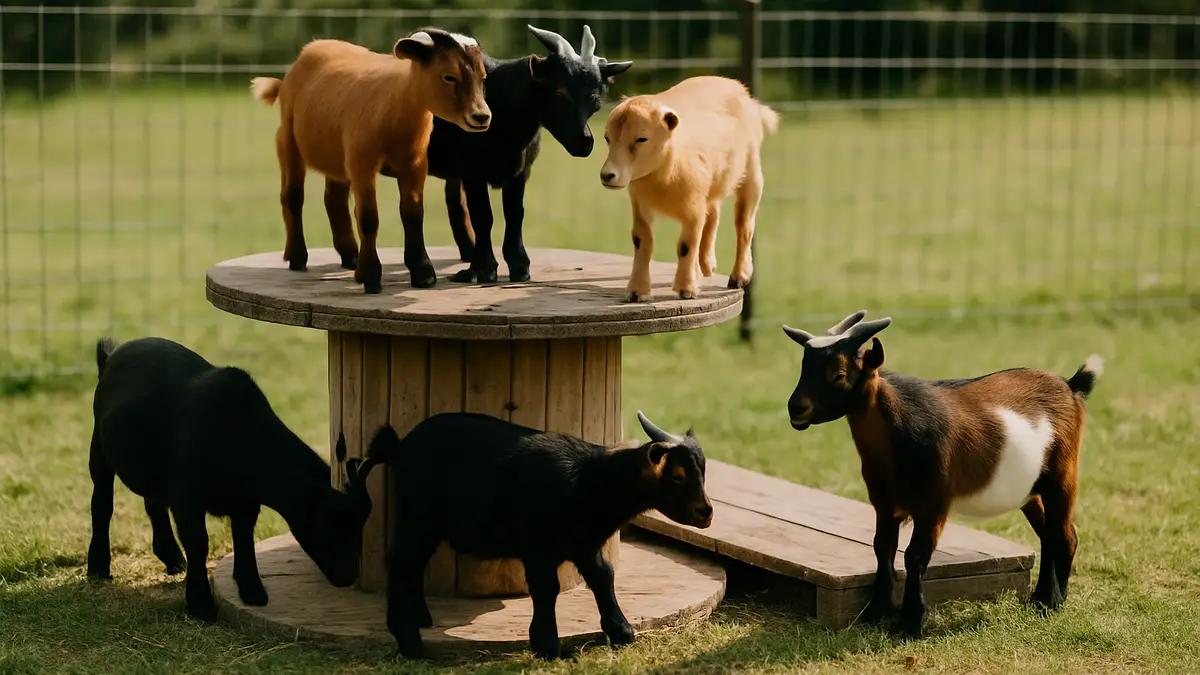
Nigerian Dwarf goats are the most requested dairy goat breed for small acreage, and for good reason: they are small enough for a suburban-adjacent hobby farm and still produce real milk. The buying math is more specific than “a few hundred dollars,” though, once you separate pet-quality animals from registered breeding stock.
What Is a Nigerian Dwarf Goat?
A Nigerian Dwarf goat is a true miniature dairy breed, not a downsized version of a larger goat, standing about 17 to 23 inches at the shoulder and weighing 60 to 75 lb at maturity. Nigerian Dwarf goats are known for producing milk with notably high butterfat content relative to their size, which is why they remain the most popular small-breed dairy goat in the US.
Nigerian Dwarf Goat Price Tiers
| Tier | Price range | What you get |
|---|---|---|
| Pet-quality, unregistered | $200 - $500 | Healthy goat, no papers, fine for milk or companionship without a breeding program |
| Registered breeding stock | $400 - $900 | Papers with a recognized dairy goat association, verified lineage, suitable for a breeding or show program |
Pet-quality goats are not for anyone planning to breed registered offspring or show competitively; without papers, kids cannot be registered even from two purebred-looking parents. They are a strong fit for anyone who wants milk and companionship without the added cost of a breeding program.
How Much Land and Feed Do They Need?
Budget about 0.2 acre per goat on average pasture, roughly 5 goats per acre, adjusted up on poor ground and down on lush pasture using the same multiplier as every species on this site (poor x1.5, lush x0.7). Winter hay runs about 3 lb per goat per day, and water intake sits around 3 gallons a day per animal. Because goats are herd animals and need at least one companion, plan your first purchase around a minimum of two goats, which means roughly 0.4 acre and 6 lb of hay a day combined. Run your specific numbers, especially if mixing goats with other species, through the acreage and feed calculator.
Breeding and Lifespan
Nigerian Dwarf goats have a gestation period of about 150 days, roughly 5 months, one of the shorter gestation periods among common homestead livestock. Kids wean at 8 to 12 weeks old. A well-kept Nigerian Dwarf typically lives 10 to 15 years, a real multi-year commitment that outlasts many first-time owners’ expectations for such a small animal.
What to Expect From Milk Production
A lactating Nigerian Dwarf doe typically produces somewhere in the range of a quart to half a gallon of milk per day, noticeably less than a full-size dairy breed in raw volume but with butterfat content that often runs higher, which many owners find makes up the difference for household use like cheese and soap making. Production varies by individual doe, stage of lactation, and diet, so treat any specific number as a planning estimate rather than a guarantee from a particular animal.
Registration and Breed Associations
Buyers planning to breed or show Nigerian Dwarf goats should look for registration through a recognized dairy goat association, which tracks lineage and allows kids to be registered in turn. A seller who cannot produce registration paperwork for an animal advertised as registered is a reason to ask more questions before paying the higher end of the price range.
Fencing and Shelter Nigerian Dwarfs Actually Need
Goats are notorious escape artists, and Nigerian Dwarfs are no exception despite their size; standard cattle or sheep fencing often has gaps small enough for a dwarf goat to squeeze through or climb over. A dedicated goat fence, typically woven wire with a hot wire offset, is worth budgeting for from day one rather than retrofitting later. Our goat fencing guide covers material options and per-foot costs, and our goat shelter guide covers housing needs specific to a small dairy herd.
Equipment Beyond Fencing
If milking is the goal, a milking stand makes the daily routine dramatically easier and safer for both goat and owner, and hoof trimmers are a recurring need since goat hooves grow continuously. Our goat equipment guide covers both with realistic price ranges.
Choosing Nigerian Dwarf vs Other Small Breeds
Nigerian Dwarfs are the strongest choice specifically for milk production in a small-breed goat; if meat, fiber, or an even smaller pet-focused animal is the priority, other breeds may fit better. Our best goat breeds for homestead roundup compares Nigerian Dwarf against Boer, Nubian, Pygmy, and other common homestead choices side by side.
Temperament and Handling
Nigerian Dwarfs are widely regarded as one of the friendliest and most people-oriented goat breeds, which is part of why they show up so often on small family homesteads rather than purely commercial dairy operations. They tend to bond closely with regular handlers and do well with routine handling from a young age, which also makes milking and health checks easier once the goat is grown, since it is already comfortable being touched and restrained briefly.
What a Starter Pair Actually Costs
Between two pet-quality goats ($400 to $1,000 total), fencing for a small paddock, a basic shelter, and a season of hay, a realistic first-year budget for a starter pair of Nigerian Dwarf goats runs $1,500 to $3,500 depending on how much fencing and shelter infrastructure already exists on your property. Registered breeding stock pushes that higher, largely on the purchase price line rather than ongoing costs, since feed and space needs stay the same regardless of paperwork.
Frequently asked questions
Quick answers to what readers ask us most
How much space do Nigerian Dwarf goats need?
About 0.2 acre per goat on average pasture, roughly 5 goats per acre. That number drops on lush pasture and rises on poor or overgrazed ground, so check your actual pasture quality before buying a full herd.
Can you keep just one Nigerian Dwarf goat?
Goats are herd animals and a single goat will be stressed and loud. Nearly every breeder requires buying at least two, which is also the more humane and practical choice regardless of any rule.
Are Nigerian Dwarf goats good milkers for their size?
Yes, they are known for producing a surprising amount of high-butterfat milk relative to their small size, which is a large part of why they are popular on small homesteads over meat-focused breeds.
How long do Nigerian Dwarf goats live?
Typically 10 to 15 years with reasonable care, similar to most dairy goat breeds. That is a longer commitment than many first-time buyers expect from such a small animal.