
Baby Highland Cow: Calf Care and What They Cost
What a baby Highland cow costs to buy and raise, from bottle-feeding through the 6 to 8 month weaning window, with real feed and shelter numbers.
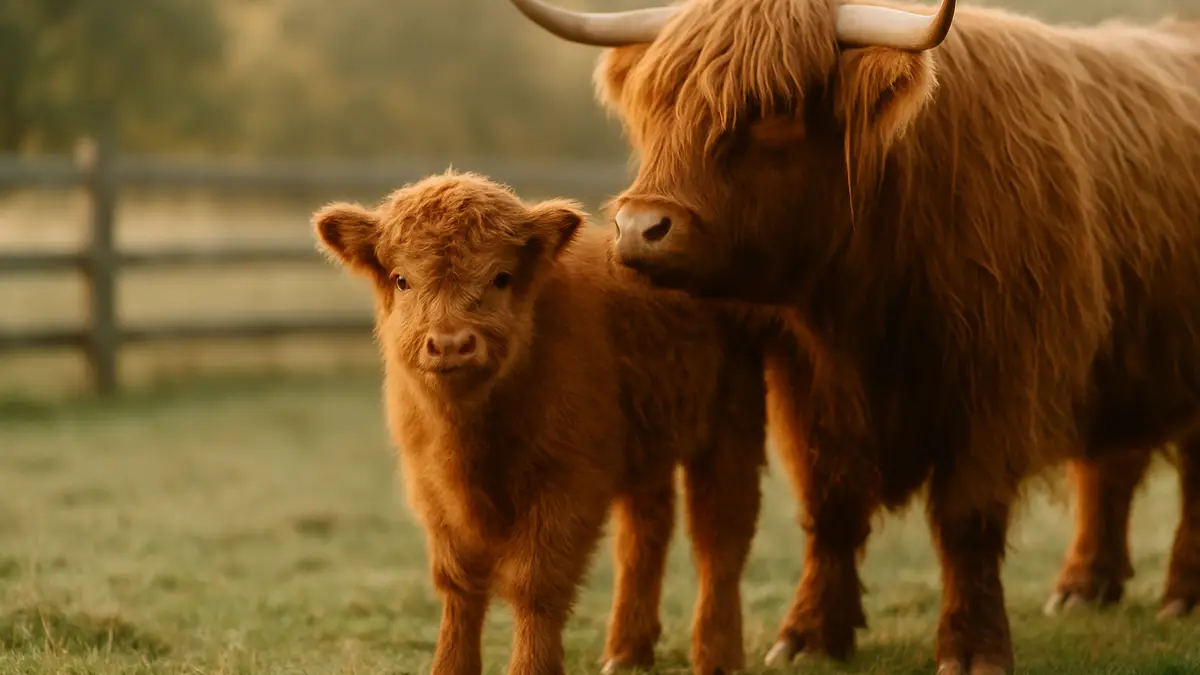
A baby Highland cow, all shaggy coat and oversized ears, is the animal that sells most people on mini cows in the first place. The photos undersell the work: a calf needs a specific feeding schedule, more monitoring than an adult, and a real budget line before it ever reaches pasture.
What Counts as a Baby Highland Cow?
A baby Highland cow is a calf from birth to weaning, generally 6 to 8 months old, whether full-size or miniature Highland genetics. Highland calves are born with a lighter, softer coat than adults and typically weigh 40 to 60 lb at birth for miniature lines, versus 60 to 90 lb for standard Highland calves.
How Much Does a Baby Highland Cow Cost?
| Type | Price range |
|---|---|
| Grade calf, unregistered | $1,500 - $3,000 |
| Registered calf, known breeder | $2,500 - $4,000+ |
Price depends on age at sale, whether the calf is halter-started, and whether both parents are registered. Calves sold very young, under 8 weeks, generally cost less but require more intensive feeding on your end; older, weaned calves cost more but arrive lower-risk.
Feeding a Highland Calf, Stage by Stage
A calf still nursing from its mother needs no supplemental feeding for the first weeks beyond a clean water source and access to a little grass hay by 3 to 4 weeks old to start rumen development. A bottle calf, separated from its dam, needs a cattle-formulated milk replacer, fed on a consistent schedule, typically 2 to 3 times a day for the first 8 to 10 weeks. By weaning, calves are transitioning to the same diet as adult cattle: pasture in season and hay in winter, working up toward the adult mini cow baseline of roughly 12 lb of hay a day. See the mini cow guide for full adult feed and water numbers.
When Do Highland Calves Wean?
Weaning happens at 6 to 8 months old, not earlier. Pulling a calf off milk or its mother before 6 months adds stress and can set back growth; most reputable breeders will not sell an un-weaned calf without a clear feeding plan for the buyer. Gestation for the dam runs about 283 days on average, with a normal range of 279 to 287 days; our cattle gestation chart breaks that down by breed and due-date math if you are planning around a calving date rather than buying an already-born calf.
Housing and Shelter for a Young Calf
A calf needs a dry, draft-free shelter separate from mud and standing water, since young cattle are more vulnerable to chill and pneumonia than adults. A simple three-sided run-in shed works for most climates once the calf is past the first few vulnerable weeks. Fencing matters too: standard cattle fencing sized for an adult can have gaps a small calf slips through, so check spacing specifically for calf safety before turnout. Full fencing options and costs are in our cattle fencing guide.
Handling and Early Training
The weeks after a calf arrives are the best window to build handling habits that last a lifetime, especially for a horned breed. Short, calm sessions getting the calf used to touch, a halter, and being led make a world of difference by the time it is a 400-pound yearling with horns of its own. Skipping this stage does not mean the calf stays unhandled forever, but retraining an adult Highland is considerably harder and less safe than shaping a calf’s habits early.
Health Basics (Not a Substitute for a Vet Visit)
This site covers husbandry and cost, not veterinary medicine, and any specific health concern with a calf, scours, poor nursing, low energy, deserves a call to a large-animal vet rather than a home diagnosis. That said, the general schedule most owners follow includes a newborn check within the first few days to confirm colostrum intake, then vaccinations and deworming on a timeline your vet sets for your region. Budget for at least one vet visit in the first year even if the calf seems perfectly healthy.
Registering a Calf
If both parents are registered with a recognized Highland cattle association, most breeders will help you register the calf in your name as part of the sale, or walk you through doing it yourself shortly after purchase. Registration matters most if you ever plan to sell, breed, or show the animal later; a calf that could have been registered but was not still looks the same in the pasture, but its resale value and breeding options are more limited down the road.
What a Calf’s First Year Actually Costs
Between purchase price, milk replacer if bottle-raised, a vet visit, and its share of hay and shelter once weaned, a realistic first-year cost for one Highland calf lands between $2,500 and $5,500, on top of whatever fencing and shelter infrastructure you are building regardless of the calf’s age. If you are buying an already-weaned calf rather than a bottle baby, the low end of that range is the more realistic number since you skip the milk replacer cost entirely.
Buying a Calf vs an Adult
A calf costs less upfront and lets you shape its handling from the start, which matters for a breed with horns. An adult, weaned and already halter-trained, costs more but removes the early-stage risk and daily feeding schedule entirely. For most first-time owners, a weaned calf around 8 to 10 months old is the practical middle ground. Our Highland cow for sale guide covers where to find both, and what a fair price looks like for each.
Frequently asked questions
Quick answers to what readers ask us most
How much does a baby Highland cow cost?
A grade Highland calf typically runs $1,500 to $3,000, while a registered calf from a known breeder runs $2,500 to $4,000 or more. Bottle-raised calves, needing more early handling, sometimes cost a bit more than dam-raised ones.
When can a Highland calf leave its mother?
Not before 6 months old, and 8 months is safer. Weaning too early stresses the calf and can affect long-term growth. Reputable breeders will not release a calf under 2 months regardless of feeding method.
What do you feed a baby Highland cow?
A calf still with its mother nurses; a bottle calf needs a cattle-specific milk replacer, not cow's milk substitutes meant for other species. Introduce a little grass hay and pasture access around 3 to 4 weeks old to start rumen development.
Do baby Highland cows need a vet checkup?
Yes. A newborn calf should see a large-animal vet within the first days for a general health check and to confirm colostrum intake, and again on a normal vaccination and deworming schedule set by that vet.