
Mini Cow vs Standard Cattle: Space and Cost Compared
Mini cows need 0.5 acre and 12 lb of hay a day versus 1.5 acres and 26 lb for standard cattle. A side-by-side look at space, feed, and cost tradeoffs.
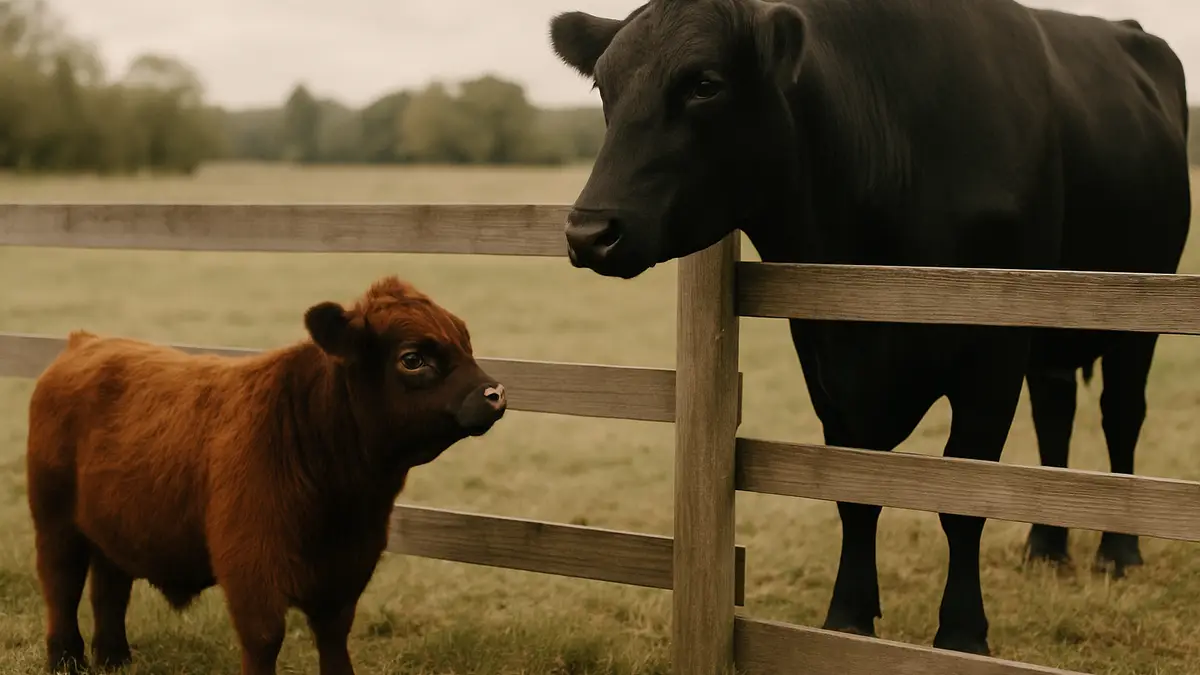
The size difference between a mini cow and a standard cow looks obvious in a photo, but the real decision comes down to three numbers: acres needed, hay eaten, and dollars spent. Here is how they actually compare, side by side, using the same baseline for both.
Mini Cow vs Standard Cattle: The Numbers
| Metric | Mini cow | Standard cattle |
|---|---|---|
| Weight | ~500 lb | ~1,100 lb |
| Acreage needed (average pasture) | 0.5 acre | 1.5 acres |
| Daily hay (winter) | ~12 lb | ~26 lb |
| Daily water | ~8 gal | ~13 gal |
| Gestation | ~283 days | ~283 days |
| Lifespan | 15-20 years | Similar, 15-20 years with good care |
A mini cow is a cow bred down to roughly a third to half the height of standard cattle, generally under 42 inches at the hip, while a standard cow refers to full-size beef or dairy breeds averaging around 1,100 lb at maturity. The acreage and feed gap between them scales almost directly with that weight difference.
Space: Three Times the Land for a Standard Cow
A standard cow needs about 1.5 acres of average, improved pasture, versus 0.5 acre for a mini cow, a three-to-one ratio that holds up whether your pasture is poor, average, or lush (the same 1.5x-for-poor, 0.7x-for-lush multiplier applies to both). On a 3-acre property, that is the difference between comfortably running two mini cows or squeezing in exactly one standard cow with no buffer. Run your own acreage against both options with the acreage and feed calculator before deciding.
Feed: More Than Double the Hay
Standard cattle eat roughly 26 lb of hay a day during winter feeding, more than double a mini cow’s 12 lb. Over a typical 20-week winter, that is the difference between about 1,680 lb of hay per mini cow and 3,640 lb per standard cow, meaning a standard cow can burn through an extra two to three round bales over a single winter compared to a mini. Water intake follows the same pattern: about 13 gallons a day for a standard cow versus 8 for a mini, both rising about 30% in hot climates.
Cost: Not as Simple as “Smaller Equals Cheaper”
This is where the comparison gets less intuitive. Mini cow genetics carry a real price premium: a registered miniature can run $3,000 to $8,000 or more, while a commercial-grade standard cow at a similar age often costs less than that on the open market, since standard cattle are a much larger, more liquid market. Where the mini cow wins is total cost of ownership: lower fencing costs (less perimeter to build, though horned breeds add their own fencing needs), lower feed costs every single year, and lower shelter costs. Over a 15-plus year lifespan, the annual feed and land savings usually outweigh a higher purchase price. See our miniature Highland cow guide for specific mini cow price tiers.
Output: What You Give Up With a Mini Cow
A mini cow produces proportionally less of everything: less milk if you are milking, a smaller carcass if raising for meat, and a smaller calf at weaning if breeding. For a homestead prioritizing a manageable family milk supply or a freezer-friendly meat animal without needing a large operation, that smaller output is often the point, not a downside. For anyone planning to sell meat or milk at any real volume, standard cattle scale better per animal, even though they need more land to do it.
Cost Over a 15-Year Ownership Window
Purchase price is a single line item; feed and land are recurring ones that compound over a long lifespan. Across 15 years, a mini cow’s smaller daily hay ration and smaller pasture footprint add up to a meaningfully lower total feed and land-opportunity cost than a standard cow, even after accounting for the mini cow’s higher purchase price premium. For owners thinking in terms of total cost of ownership rather than just the check written on day one, that long recurring gap in feed and space is usually the more important number.
Fencing and Handling Differences
Mini cattle are generally easier to handle simply due to size, lower fence heights and lighter-duty gates can work, though horned mini breeds like Highlands still need horn-aware fencing and handling facilities. Standard cattle need taller, stronger fencing and squeeze chutes or handling equipment sized for their weight, which adds real cost to any setup. Our cattle fencing guide covers material and cost differences across both.
Temperament and Day-to-Day Handling
Size affects more than fencing. A mini cow that gets spooked or pushy is far easier to manage and redirect than a standard cow doing the same thing, simply due to weight and strength. For households with kids around the animals regularly, that difference in manageable force is a real safety consideration, not just a convenience one, and it is a common reason families choose mini cattle over standard breeds even when acreage would technically support either.
Which One Fits Your Acreage
Under 5 acres, especially once a barn, laneway, and garden are accounted for, a mini cow is almost always the better fit: the acreage math simply does not leave room for a standard cow’s 1.5-acre-per-head requirement alongside anything else. On 10 acres or more, a standard cow becomes realistic and may make more sense if meat or milk yield per animal is the priority over sheer land efficiency. Our mini cow guide covers full buying and setup costs if the comparison above points you toward the smaller option.
Frequently asked questions
Quick answers to what readers ask us most
How much less land does a mini cow need than a standard cow?
About a third as much. A mini cow needs roughly 0.5 acre of average pasture versus 1.5 acres for a standard cow, a gap that matters most for anyone working with 5 acres or less.
Do mini cows produce as much milk or meat as standard cattle?
No, output scales with size. A mini cow yields noticeably less milk and a smaller carcass than a standard cow, which is part of the tradeoff: less land and feed, but also less product per animal.
Is a mini cow cheaper to buy than a standard cow?
Not always. Mini cow genetics carry a price premium, so a registered mini cow can cost as much as or more than a commercial-grade standard cow, even though the mini costs less to feed and fence long-term.
Which is better for a small homestead, a mini cow or a standard cow?
For under 5 acres, a mini cow almost always fits better, since the acreage and hay math favors it heavily. On 10 or more acres, a standard cow becomes more practical if meat or milk yield per animal matters to your goals.